Showing posts with label four stars. Show all posts

Monday, August 25, 2014

Review: Ruin and Rising

I was expecting to be infuriated by this book, and instead I'm just kind of....meh? I didn't hate it, but this isn't the ending I would have picked.

However, since I'm also not the author, that doesn't really matter, does it?

So, the final book in the Grisha trilogy opens with Alina stuck underground at the White Chapel, the Apparat's home base. He wants to glorify her as a saint to the faithful pilgrim army he's amassed, but there's one problem: she can't summon anymore.

Or, well, she can probably summon, but she's too far underground to call sunlight to her, and the Apparat's totally unwilling to let someone as important as her go back aboveground. At least, until Mal and her other friends stage a mock-revolt and blow a hole in the one room in the chapel that has aboveground access, allowing her to call on her powers and pull the rug out from under the Apparat.

He begrudgingly agrees to let them go in search of the mysterious firebird, which will hopefully be the third and final amplifier Alina needs. They have to be careful, though - the Darkling has been destroying access tunnels left and right, and they don't want to walk out of a functional one into an ambush. They also need to figure out who has to go along with them to find the firebird, and who they might be able to send over to West Ravka into safety.

Tolya and Tamar inform the rest of them about a somewhat nearby smugglers' post Nikolai used to use once they're on the surface, and they decide to stop there first, hoping that Nikolai is still alive and might be able to help them. After almost getting caught by the First Army, Alina's band is rescued by the man himself and taken to his new base up in the mountains.

They all reconnoiter there for a while, making plans and getting more training, and everything seems to be going relatively smoothly. (There are a couple minor bumps in the road, but they work themselves out with minimal damage.) This, of course, means it's the perfect time for the Darkling to attack, which he does. He transforms Nikolai into some kind of monstrous bird-like creature and does some serious damage to the rest of the group, prompting yet another last second escape.

Now a little more bruised and worn, Alina's group finally makes it to the mountains where they suspect the firebird lives, and they begin the expedition to find it. When the firebird finally reveals itself, only Mal and Alina are actually present, and it leads her to a shocking revelation - the firebird's not the amplifier. Mal is.

Baghra told Alina her life story back at Nikolai's base, informing her that she, Baghra, is actually Ivan Morozova's elder daughter. (Yes, that Morozova, the man who infused the stag and the sea whip with their amplifying powers.) She had a younger sister that died, and Morozova resurrected her, infusing her and not the firebird with the power. Alina puts two and two together, and realizes that Mal's descended from the younger sister, which is why he's so spookily good at tracking. She automatically refuses to kill him, but he makes her swear that when the time's right, she'll do it anyways.

The time becomes right soon after, once the band makes its way back to the Fold. They've managed to get word to the Apparat to send his army, but only a few came - they had to sneak out, because he wasn't actually permitting anyone to go. The whole group is planning on sneaking up on the Darkling's skiff once it's in the middle of the Fold, but he's expecting them, and soon their plans go too awry to be saved. Mal comes running up to Alina, and she does what she has to do, stabbing him in the chest-

-and then another unexpected event occurs. Mal dies, but instead of his death amplifying Alina's power, it releases it instead. Now all of the non-Grisha fighters can summon minor amounts of sunlight, and they figure out how to work together and dismantle the Fold once and for all.

Alina's powerless now, but she's still capable of wielding a knife, and she kills the Darkling herself. She also makes her friends promise that they'll claim she died on the battlefield, leaving the newly untransformed Nikolai to lead Ravka. The epilogue informs us that she and Mal moved back to Keramzin and began their own orphanage, where they're visited periodically by some strange, grand guests.

Like I said before, I don't know if this is the ending I would have wanted for this series, but it's the ending I got. Even though Alina's loss of power was much less voluntary than I'd heard, I still don't particularly like it. I get that she didn't like all the changes she had to make in her life thanks to the discovery of her power, but sometimes you can't just magically get rid of your problems and go back to your old ways. I'd rather she finally learned to deal with her new circumstances and accept that she can't just be the old Alina anymore rather than get this deus ex machina of an ending.

I at least learned to like Mal again in book three. He was kind of a brat in Siege and Storm, but he admitted to that in Ruin and Rising and tried to amend his ways, as did Alina. I'm still not a diehard Mal/Alina shipper, but I'm not so turned off by it anymore, either.

(Let's be real, though, Tamar/Nadia and Genya/David are the real masterpiece ships of this series. Canon lesbians! In a fantasy series! That don't just have angst all the time! Be still my heart!)

Overall, Ruin and Rising is really good to its side characters and only okay to its two biggest protagonists. They have each other now, yes, but I'm a little skeptical that they'll be totally satisfied with that for the rest of their lives. Four stars, because the writing was still A+.

Monday, August 4, 2014

Review: The Jewel

A sci-fi YA novel that I actually enjoyed reading? Am I hallucinating? Is it Christmas? 

(Also, it's an ARC, so keep your eyes peeled on September 2nd!)


Violet Lasting is about to become no more.

She's one of two hundred girls capable of being a surrogate for the upper class women in her society, and as such, she no longer gets to have a name. She's Lot 197, one of the most desirable bodies in the bunch, because she's exceptionally talented at using the Auguries, the mutations that allow her to be a surrogate.

At first, she thinks she'll go to the Electress, the leader of the Lone City, but then the Duchess of the Lake makes a surprise bid and wins her just as the time on her auction runs out. This has consequences both good and bad for Violet.

The good: she lives in an opulent palace where all of her wants and needs are taken care of at the snap of a finger. She also meets Ash there, a boy who's in a predicament similar to hers, and they end up falling hard for each other.

The bad: If she puts a toe out of line, the Duchess punishes her tenfold for it. And she and Ash are technically not supposed to have any contact, as they are both property of the Duchess to be used for different tasks.

Violet soon learns of a way out of the Jewel, the city center where she now lives. It'll be dangerous for her to get out and get to safety, but it's just as dangerous for her to stay - implantation has a lot of negative side effects on the surrogates, and the Duchess wants her to manipulate the Auguries in ways that might actually kill her. A choice has to be made - will she protect herself and get out of the Jewel, or will she protect her friends and stay with Ash until the end? The last few pages are full of surprises.

I plowed my way through this book in a day. It's really easy to read, and the concept's pretty interesting. The blurb calls it a cross between The Selection and The Handmaid's Tale, and I'd say that's pretty accurate, though the Auguries have to be taken into account, too. Getting blindsided by magic nearly turned me off to this book.

I really, really loved the worldbuilding in this novel. It's not a dystopian possible future thing like The Hunger Games or The Handmaid's Tale. It's set in its own world: the Lone City, shaped like a concentric circle with five sections. There's the Marsh, the Farm, the Smoke, the Bank, and the Jewel, all pretty self-explanatory. Surrogates can only come from the Marsh, and only the people in the Jewel need them to reproduce - everyone else is still capable of doing it naturally. There's a blood test to determine which girls are surrogates, and they get sent to special training facilities once they're old enough so they can learn how to use their Auguries. It all makes sense, and I didn't notice any gaping plot holes at any point in the novel.

Surprisingly, I also didn't mind the love interest. Ash is a nice guy, and he doesn't have any of those "brooding abuser" characteristics that tend to happen in YA romances. He and Violet aren't one of my favorite couples of all time, but I liked their story well enough. It added another layer of complication to an already dense web of choices, probably even the most important complication - if Violet wasn't in love, she would have less compelling reasons to stay in the Jewel.

I can tell The Jewel is going to have a sequel - the ending was definitely not final. Hopefully it comes out pretty quickly, because I'm definitely hooked enough to want to see what happens next, even if I'm not totally in love. Four stars.

Friday, July 25, 2014

Authors Who Need More Love: Trenton Lee Stewart

This might be shorter than usual, because I'm going out with friends in like forty-five minutes, sorry!

Photo cred here

Been looking for another good friendship-driven series now that Harry Potter's done? This is what you want.

Reynie Muldoon is an orphan from Stonetown. He's more interested in reading the paper than watching TV, so the other kids just kind of ostracize him. That quirk, though, is what leads him to his first ever friends.

He and his tutor, Miss Perumal, notice an advertisement aimed at brilliant kids one day, so they decide to have him go - what's the worst that could happen, a waste of a day? Before she can take him, though, Miss Perumal's mother falls ill, so Reynie has to go by himself to take the test.

Reynie passes the first test and every one subsequent, noticing that a lot of the tasks are actually riddles, not questions. Once he's done, he and three other kids - Sticky, Kate, and Constance - are left to meet Mr. Benedict, the man behind the tests. 

Cleverness is what got Reynie through the tests, but that can't be said for the others. Sticky's a genius, Kate's a daredevil who used to be in the circus (no, really), and Constance is stubborn and contrary. Together, they're the perfect team for what Mr. Benedict needs them to do: infiltrate the Institute, a mysterious school located on an island near Stonetown.

Why are they infiltrating? The headmaster of the Institute, Mr. Curtain, has a machine called the Whisperer that's putting subliminal messages into the media - radio and TV broadcasts, to be specific. Soon, though, he's not going to need the middleman. He'll be able to broadcast messages directly into people's heads. Reynie, Sticky, Kate, and Constance need to figure out where the Whisperer is and how to disable it before Mr. Curtain can get that far.

The kids' struggles with Mr. Curtain and his henchmen span the three main novels of this series, taking them around the world before ultimately landing them back in Stonetown. The fourth novel in this series focuses on Mr. Benedict as a child. (I haven't actually read it, so that's all I know.)

I legitimately adore this series. The kids are realistic - they're both precociously smart and childishly naive. The puzzles are also fun and challenging - I'm nearly a decade older than the characters, and sometimes I can't even figure out the riddles before they do. The story is also full of clever wordplay that brings a smile to my face - the Institute is located on "Nomansan Island," for example. Sound that out.

The only thing I have to say against these books is that sometimes they can be a little bit too sanitized, in my opinion. For example, the kids are taught not to kill any of Mr. Curtain's torture-loving henchmen, because they're better than that. I'm okay with not having tiny assassin children, don't get me wrong, but I think in situations like the kids get into, there's a decent chance that they'd have to try a kill shot if it really came down to an "us or them" decision.

(That sounds terribly callous of me, but I'm running out of time. I'll explain better later if you'd like.)

Overall, the three main MBS books get four stars from me. They're fun and captivating, and the kids remind me a lot of the Golden Trio from Harry Potter. Does it get much better than that?

Tuesday, July 22, 2014

Review: Revenge of the Girl With the Great Personality

I'm gonna apologize right now if this is rough, because I read this over the Fourth of July weekend and now it's practically a month later. Oy.


(I picked this up because of the cover way back when. Not ashamed.)

Lexi Anderson attends a lot of beauty pageants. One would think this is because she's a contestant.

Wrong.

Her little sister is.

Mackenzie is only seven, but she's been on the mini beauty queen track practically since birth, meaning Lexi's been dragged along to a lot of these things, mostly so Mac can take full advantage of Lexi's sewing skills.

Lexi just wants to save up enough money to go to NYC for the summer and take some fashion courses, but her mother's near constant demands for more money to spend on Mackenzie is taking a toll on her. Lexi's also tired of coming in second to every boy in the school because they'd rather date someone with great looks over someone with a great personality.

So she and her best friend Benny make a deal. Every time she actually dresses up for school and/or flirts with a guy, he has to make another move on the guy he likes in return. At first, it all seems to work out: Lexi gains some confidence from looking good, she gets asked out by one of the cutest boys in school, and she's even getting noticed by the boy she actually likes. And then it starts falling to pieces.

Mom steals money from Lexi's bank account to fund Mackenzie's next pageant. Mac starts saying that she wants to stop doing pageants, though their mother doesn't listen. And Lexi's dad, who is usually the most honest with her, drops the bombshell that he's engaged and living with another woman.

What's a girl to do? Show her mother that it's about time she listened to her daughters, that's what.

I won't lie, this book is basically the novel version of a rom-com. (Though Lexi does end up single, so it's maybe not 100% similar.) It's short, it's easy to plow through, and it's not chock-full of life-changing, inspiring affirmations. But that doesn't mean it's not good.

Lexi actually grows a lot as a character in this book, learning what it really means to be a good friend, a good sister, and a good person. She's also very genuine - when she starts understanding how to really be herself and take responsibility for her actions, it doesn't feel tired or like Eulberg is pushing some kind of moral standard. She's a teenage character who reminds me of actual teenagers today, not what the author thinks teenagers are or the teenagers the author knew when they were young.

I also love Benny's inclusion in this novel. He's a closeted gay kid in the middle of Texas whose parents are pretty religious, but he's still willing to go out and catch the guy he really likes, and I like that kind of bravery in a person. What I like more, though, is that Eulberg doesn't make him a standard Gay Best Friend character. Yes, he likes seeing Lexi get all dolled up, but he also likes wearing t-shirts with 80s references screenprinted on them and playing around in his game room. He's a person, not a plot device, and I want to see more characters like him.

I would be remiss if I didn't talk about the pageants, so here goes: I really like how they're handled. Even though Lexi hates them, she really only hates them for the younger kids and for how her family specifically isn't actually being helped by them. She admits that they can help other families come together and that they do give girls some poise (and maybe some scholarship money), so they're not all bad. They're also not written in a satirical way that invites the reader to laugh at them - I mean, outside of using technical terms like "butt glue." That's naturally funny, man. I don't watch Toddlers and Tiaras or any other show like that, but I wouldn't be surprised to find out that RotGwtGP handles pageants more respectfully than they do.

Overall, Revenge is a classic breezy summer read. It's pretty fast-paced, it's not arrogant, and it's enjoyable more than anything else. It's also genuinely well-written and believable, so it doesn't feel like a waste of time, either. Four stars.

Wednesday, July 16, 2014

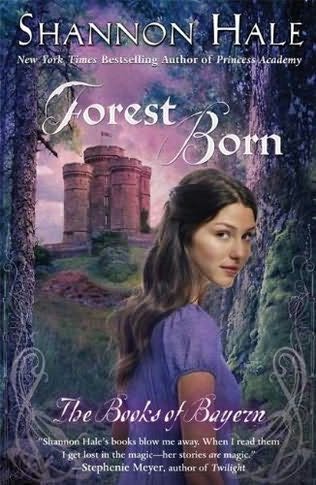
Review: Forest Born

And with this I'll finally move on from the Books of Bayern!

...Only to still have like six books in my backlog. Oy. Let's worry about that later, though.


So in the final Book of Bayern, our protagonist is Rin, Razo's beloved little sister. She's lived in the Forest with Ma and the rest of her huge family all her life, but recently, she's been feeling like she doesn't belong, like the very trees want to shun her.

No, seriously: Rin's always felt some communion with trees, but now they just fill her with a sick, shameful feeling whenever she tries to connect with them. She claims she's not sure why that is, but her veneer gets more and more cracked as the novel goes on.

To avoid the sickening tree feeling, Razo and Dasha take Rin back to the capital with them and secure her a position as one of Isi's ladies in waiting. Rin instantly falls in love with Tusken, Isi and Geric's two year old son, and protects him from untrustworthy servants like a fierce mama bear. Everything's going fairly well-

-until Geric and his company get attacked by fire speakers on their way back to the capital. Isi, Enna, and Dasha immediately pack up their things, partly to make sure their partners are okay, but mostly to use their own gifts to smoke out whoever tried to harm Geric. They decide to take Tusken along, too, once Rin and Isi learn that the untrustworthy servant, Celie, can't be found anywhere, and that means Rin is also going to travel as Tusken's nanny.

The girls meet up with the boys easily and the three "Fire Sisters," as Rin calls them, decide to continue on towards Kel, the source of all the fire speaking rumors. They try to go off alone, but Rin sneaks along after them desperately - being around the three of them, Isi especially, has finally relieved some of Rin's stress, and she doesn't want to let that go.

As they travel, Rin discovers that she's pretty good at getting people to respond to her desires - maybe even unnaturally good. Isi and Enna's talk about people speaking and how terrible it is plants a new fear in her mind, especially once the four girls meet the Queen of Kel and learn that she's kidnapped Tusken and Razo in order to extort Isi.

Who is the Queen of Kel? Can Rin break the Fire Sisters out of the dungeon? Most importantly, will Rin finally accept the truth about herself and her abilities? I'm not going to spoil that for any of you.

Forest Born is pretty cool, in my opinion, because it's just slightly different from the first three Books of Bayern. In the first three, Isi, Enna, and Razo all have the words and knowledge to give names to their powers - Isi knows she can speak with wind, Enna can read her fire knowledge, and Razo has seen both of these powers in action. Rin, however, doesn't understand that her quirks are actually powers like those of the Fire Sisters. She just thinks she's different and wrong, which is a really interesting take on the whole "person discovers their quirks are actually magic" genre.

(However, after three novels where the protagonists are all well aware of magic, Rin's total lack of functional descriptive language can make the book a little slower to read at times. I admit that that could just be my personal shortcoming, though.)

I also love how Forest Born brings the series full circle. Again, not spoiling the ending, but the explanations given for how this story is possible fit together easily, and also make sense of one of the catalysts from Enna Burning, too. I realize we should expect novels to have good continuity, but some plot twists just work better than others, and this is one of the truly well-written ones.

The last thing I want to say about Forest Born is that it doesn't include a romance, unlike the other three, and I love that. Rin's biggest struggle in this book is figuring who she is and what she can do - she's not in the right place to fall in love. Her self-discovery comes from inner strength and loving familial and platonic relationships, which we just don't see enough in literature. While I don't mind romantic relationships that help the protagonist learn more about themselves, people need to see that those aren't the only kind of relationships that are worthwhile and important.

Overall, Forest Born is a great conclusion to a fantastic series that tells of one girl's journey to self-esteem but also wraps up a larger, overarching plot in a clean, engaging way. Four stars.

Tuesday, July 1, 2014

Review: Jane


I almost feel like I can't even call this a reread, because it's been so long since my original read of this novel. But hey, that makes it fresh and less biased, right?

(Am I a spin master yet?)


If it wasn't already apparent from the cover and title, Jane is a modern-day retelling of Jane Eyre, one of my favorite classics. (Seriously, Charlotte Brontë > Jane Austen any day of the week.) The titular heroine is now Jane Moore, a student at Sarah Lawrence who is forced to drop out of college when her parents die, drying up her funds. Jane applies at a nanny service, and her total lack of pop culture knowledge lands her a job tending to famous rock star Nico Rathburn's daughter Maddy.

While Jane has her anxieties about taking this job, she soon falls into a rhythm at Thornfield Park. Maddy's a little bit spoiled but ultimately a sweetheart, the rest of the staff is nice enough, and the landscape is gorgeous - perfect for an amateur watercolorist like herself. One day, as Jane's out walking to a nice spot to paint, she almost gets hit by a car, and who should be driving that car but Nico Rathburn himself? They get off to a bit of a turbulent start, understandably, but Nico is easily charmed by Jane's blunt yet well-meaning honesty, and Jane finds herself drawn to her mysterious employer. After a bit of a stunt with the celebrity photographer that's been sent out to Nico's estate to document his band's comeback, Jane and Nico start dating and plan a whirlwind wedding. Everything is awesome.


At least until Nico's bipolar first wife is found alive and kicking - well, more like biting - in a secret wing of Thornfield. Smooth move, Nico.

Jane runs away then, unwilling to marry a man who still feels a lot of affection for someone else, and ends up in New Haven. A nice waitress, Diana, lets Jane come home with her that night, and Jane eventually settles in with Diana and her siblings, Maria and River St. John. River is charismatic when he chooses to be, intensely focused on helping the less fortunate. He believes Jane is the perfect companion for him and wants her to volunteer out in Haiti with him, but Jane's not so sure. A series of quite fortunate events leads her to a movie theater where Nico's documentary is showing, and she sees that he was torn completely apart by her disappearance, especially after his first wife managed to burn Thornfield Park down, injuring Nico and killing herself in the process. Jane immediately rushes to Manhattan and finds Nico again, and I assume you can figure out how that ends, dear reader.

I have to say, reading a modern adaptation of Jane Eyre really shows some of the creepier aspects of the story. It's not that they aren't apparent in the original, but Rathburn/Rochester's domineering tendencies and locked-up ex-wife are a little easier to explain away and understand with the context of nineteenth-century England behind them. Putting them into a modern setting makes me feel much more disturbed by his actions.

Jane herself is still a great character, though. Her backstory is rife with little details that make me wish someone had called CPS on her parents when she was a child, but her tenacity and her unwillingness to change herself to please others are timeless, wonderful qualities. I'm really glad that updating her didn't make her as unfortunately creepy as Rathburn/Rochester, who gave me a lot of unpleasant vibes as his relationship with Jane progressed. (He's less creepy at the ending, though, don't worry!)

Overall, the modernization of Jane has more upsides than down, and it's fun to see familiar characters tossed into new, updated situations. While it doesn't beat out The Lizzie Bennet Diaries as my favorite reworking, it's still a good, well-constructed read. Four stars.

Wednesday, June 18, 2014

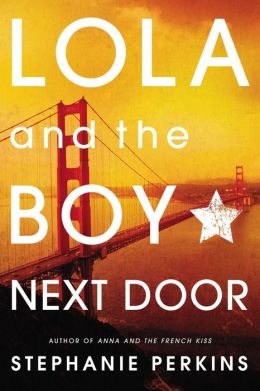
Review: Lola and the Boy Next Door

Real talk: I actually procrastinated reading this because I thought it couldn't live up to Anna and the French Kiss. Silly me, I forgot how compelling Cricket Bell is (and also how much I live for the little Anna/Etienne moments sprinkled throughout Lola. I have my loyalties.).

Reading this got me even more excited for Isla and the Happily Ever After, too. I NEED IT.


So in this companion novel to AatFK, we meet sixteen year old Lola Nolan of San Francisco. Lola expresses herself in a manner that almost seems costume-y - wearing a red gingham ex-tablecloth as a dress to go on a picnic, for example. It's fantastic.

Lola's boyfriend at the start of this novel is a twenty-two year old named Max. Lola's dads don't like Max for pretty much that exact reason, so they make him come over for Sunday brunch every week as well as make Lola call every hour on the hour when they're on dates. Lola's willing to deal with these inconveniences, though, because she'll graduate soon enough and then she and Max can go on the road with his band while she designs costumes for a living. She has it all planned out.

And then Cricket Bell moves back to town.

Cricket Bell is Lola's childhood next door neighbor who has always been overshadowed by his figure skating star twin sister Calliope. (Yes, by the way, they're those Bells. As in the phone company.) Cricket and Lola were becoming pretty intense a couple years ago until miscommunications happen and each of them feels betrayed by the other.

Cut to now, when Cricket tells Lola that Calliope played them both out of jealousy and fear that Cricket was picking someone else over her. Oh, and he's still in love with Lola. Hasn't stopped for a second.

Bad time for Max to walk in, isn't it?

Cricket's reappearance into Lola's life makes her rethink a lot of her desires: is Max really the one? Do her costumes hide her or reveal her? And most importantly, can she go to the winter dance in the coolest Marie Antoinette dress possible?

Maybe the moon can help guide her to the answers.

If you're worried, Lola and the Boy Next Door doesn't suffer from the sophomore slump. Though it follows the same sort of will-they-or-won't-they pattern as AatFK, it's not an exact retelling with all the character names find-and-replaced. Lola and Anna are two distinctly different people, which is made apparent when they interact as coworkers at the local movie theater. Etienne and Cricket are also not carbon copies of each other - Cricket's far too tall, for one. (Kidding. They're very much dissimilar.)

Lola's story is also much less ethereal than Anna's can be. While Anna falls in love in Paris, widely regarded as the most romantic city in the world, Lola's story is messier and more colorful, much like San Francisco itself. Her costume-y style also shapes the events that unfold - much of the story wouldn't be possible, for example, without the Marie Antoinette dress Lola wants to make.

Overall, Lola and the French Kiss lives up to the standards Anna and the French Kiss set. It's a whirl of colors and emotions and plans that's centered around creating - both Lola's love of sewing and Cricket's engineering skills form the backbone of this novel. If Anna's the sweet, nerdy older sister, Lola's the wild yet loving middle child who might try to go off the rails sometimes but will ultimately always find her way back home. Four stars and a great desire to up my game clothing-wise.

Tuesday, June 10, 2014

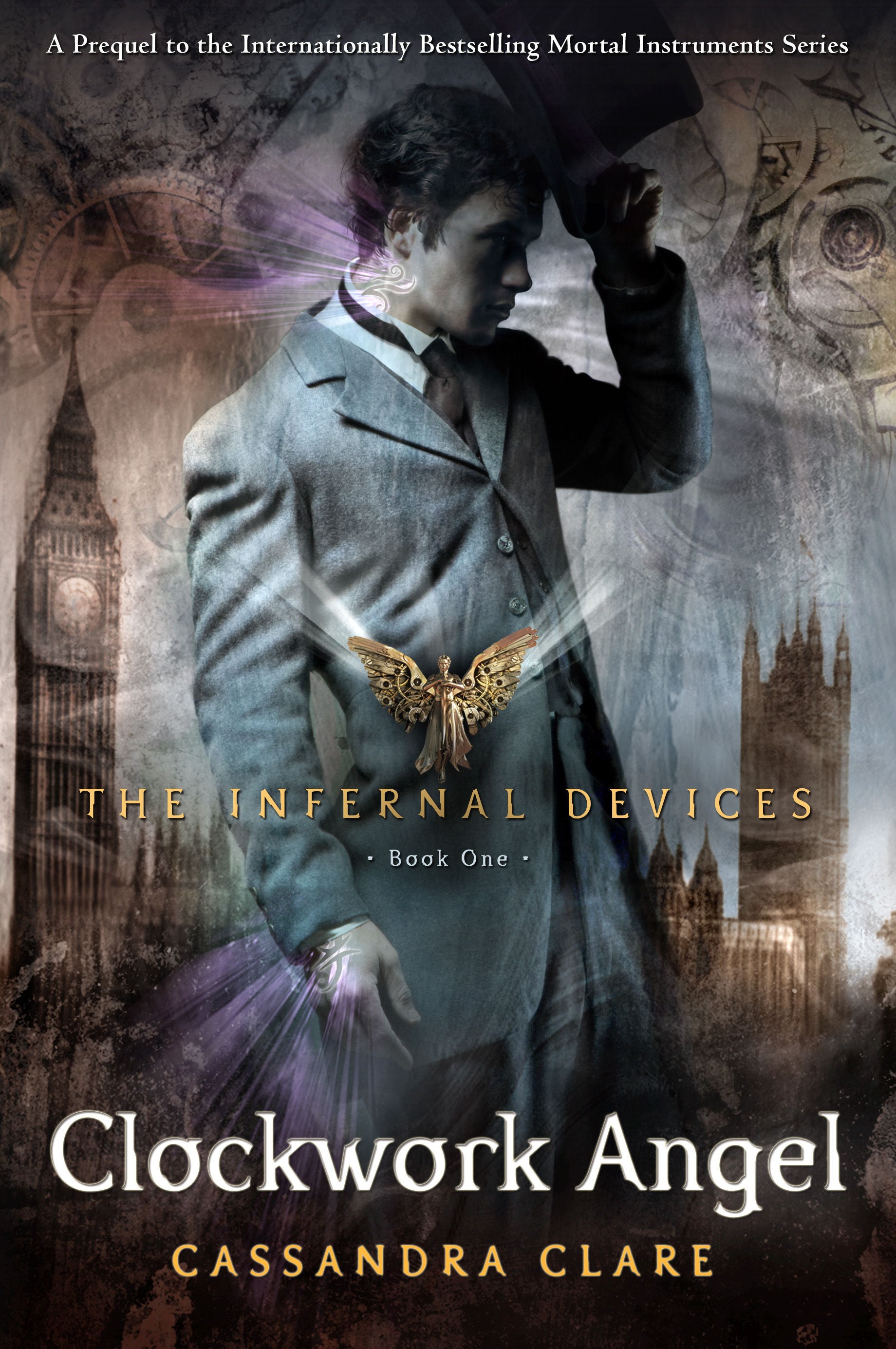
Review: Clockwork Angel

I'm a pretty late convert to the Shadowhunter world, I know. I tried reading City of Bones at least twice back in high school, but then the Clary/Jace bombshell in the earlier books turned me right off. (I'm trying to be a little vague in case anyone else here wants to remain unspoiled, but you guys ought to know what I mean.)

Cut to last fall, after I've 1) read A Song of Ice and Fire and thus become desensitized to anything ever seeming weird after the relationships in that series and 2) transferred to Michigan and need something to distract me from my anxiety. I decide to give City of Bones another go because of the movie, and wham bam thank you ma'am, I'm hooked.

I've finished all of the Mortal Instruments books now, so I figure now is as good a time as ever to start the Infernal Devices, right? Good decision, me.


Clockwork Angel is set over a hundred years before the Mortal Instruments series begins and centers on Tessa Gray, who makes the journey from New York to London to meet up with her brother, Nathaniel. Their aunt has just died, and Nate is all the family Tessa has left. When she arrives in Southampton, she's met by Mrs. Black and Mrs. Dark, a pair of sisters who say Nate sent them in his stead to pick up Tessa.

Wrong. The Dark Sisters actually imprison Tessa in their home, forcing her to use magic she never knew she was capable of and preparing her for marriage to "the Magister," whoever that may be. They say they have Nate locked up somewhere, and that the Magister will release him once she's married to him, if that's what she wants.

Fortunately for Tessa, she's rescued by Will Herondale in a Shadowhunter raid on the Dark Sisters' home. He takes her back to the Institute, where she's offered sanctuary until they figure out how to stop the Magister and find her brother. Tessa accepts, although she's wary that the Shadowhunters will want to use her powers for their own gain, just as the Dark Sisters did.

Tessa and the Shadowhunters - Will, Jem Carstairs, and Henry and Charlotte Branwell - work with the vampire Camille Belcourt and the warlock Magnus Bane to take down Alexei de Quincey, the alleged Magister. They even manage to rescue Nate in the process, much to the delight of both Tessa and Jessamine Lovelace, a Shadowhunter who'd much rather be a lady of society.

De Quincey isn't the man they're looking for, however, and a few twists of betrayal leave Tessa still in danger at the end of the novel. Will's backstory is also still unsolved, much to my frustration. (I'd also like to learn a bit more about Jessamine, if I had my druthers.)

Clockwork Angel is a great example of a spin-off series that still does the original justice. The storyline is fresh and engaging, and the characters aren't carbon copies of their predecessors (postdecessors?), though they do share some quirks. I also love seeing Magnus and Camille appear in this series - it feels like a nice unifier.

I know from City of Heavenly Fire that some of the characters from this series will survive to see that series end, too, so a lot of my brainpower is devoted to figuring out exactly how that's going to work. I think I have one of the character's trajectories traced already....

Overall, Clockwork Angel is definitely worth the read. It's interesting and unique while still incorporating well-loved elements from the Mortal Instruments. My only complaint is that some of the characters feel too reminiscent of characters Cassandra Clare already created at times, but it's not like different people can't have similar habits. 4/5 stars.